
12 Japanese Style Bathroom Inspirations: Zen, Minimal & Modern Design Ideas for a Peaceful Home
Japanese Style Bathroom Inspirations: Creating a Calm, Zen-Like Sanctuary at Home
In a fast-paced world full of noise, clutter, and constant digital distractions, the bathroom has quietly become one of the most important spaces in the home. It is no longer just a functional area—it is a place to slow down, reset, and reconnect with yourself. This is exactly why japanese style bathroom inspirations have become so popular across the globe. Rooted in centuries-old traditions, Japanese bathrooms emphasize mindfulness, simplicity, cleanliness, and a deep connection with nature.
Unlike many Western bathrooms that combine multiple functions into a single rushed experience, Japanese-style bathrooms are designed as ritual spaces. Every element has a purpose. Every material tells a story. From soaking tubs that encourage relaxation to natural textures that calm the senses, Japanese bathroom design is about harmony—between body, mind, and environment.
In this detailed guide, we’ll explore the philosophy behind Japanese bathroom design, key elements you can incorporate, layout ideas for both small and large spaces, material choices, lighting techniques, and modern adaptations. Whether you’re renovating or simply gathering japanese style bathroom inspirations, this article will help you create a serene, spa-like retreat in your own home.
Understanding the Philosophy Behind Japanese Bathroom Design
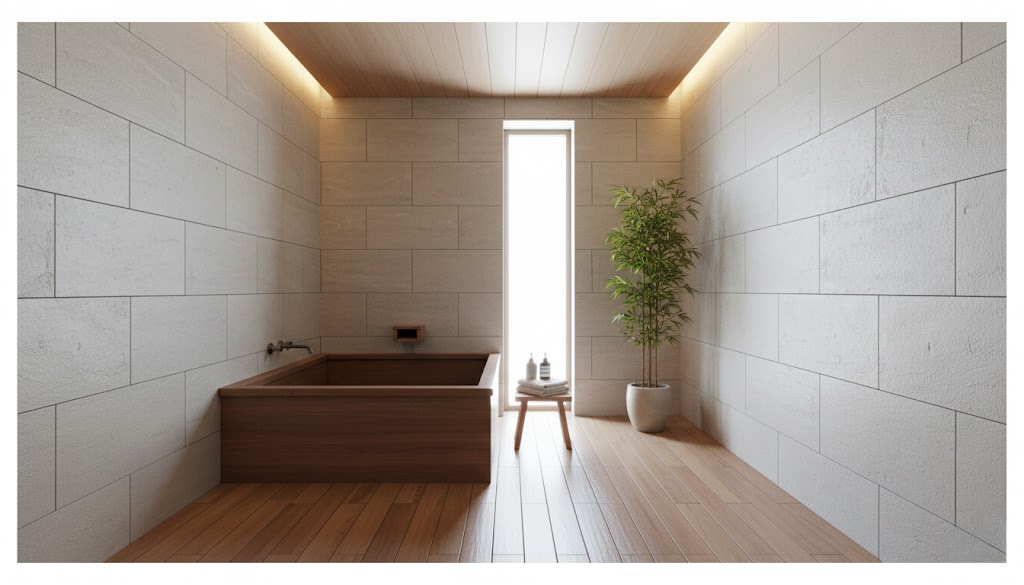
At the heart of Japanese interior design lies a powerful concept: less is more. This philosophy is heavily influenced by Zen Buddhism and traditional Japanese aesthetics, which value simplicity, balance, and intentional living.
In Japanese culture, bathing is not rushed. It is a daily ritual meant to cleanse both the body and the mind. This mindset shapes the bathroom’s design. The space is calm, uncluttered, and thoughtfully arranged to promote relaxation.
Key philosophical principles include:
- Mindfulness: Every action, including bathing, is done with awareness.
- Purity and cleanliness: Japanese bathrooms are meticulously clean and often separated into dry and wet zones.
- Harmony with nature: Natural materials and organic textures are central.
- Function before decoration: Beauty comes from practicality and simplicity.
When you embrace these values, you’re not just copying a style—you’re adopting a lifestyle that prioritizes peace and balance.
The Importance of Separation: Wet and Dry Zones
One of the most distinctive features of Japanese bathrooms is the separation of wet and dry areas. This practical layout enhances cleanliness and comfort.
Typically, the bathroom is divided into:
- Washing area: Equipped with a handheld shower and a small stool for seated washing.
- Soaking area: Featuring a deep bathtub (ofuro) used only after the body is clean.
- Dry area: Where sinks, storage, and sometimes toilets are located.
This separation allows multiple family members to use the space efficiently while keeping everything organized and hygienic. It’s a concept that many modern designers are now adapting for Western homes.
The Iconic Ofuro: Deep Soaking Tubs for Relaxation
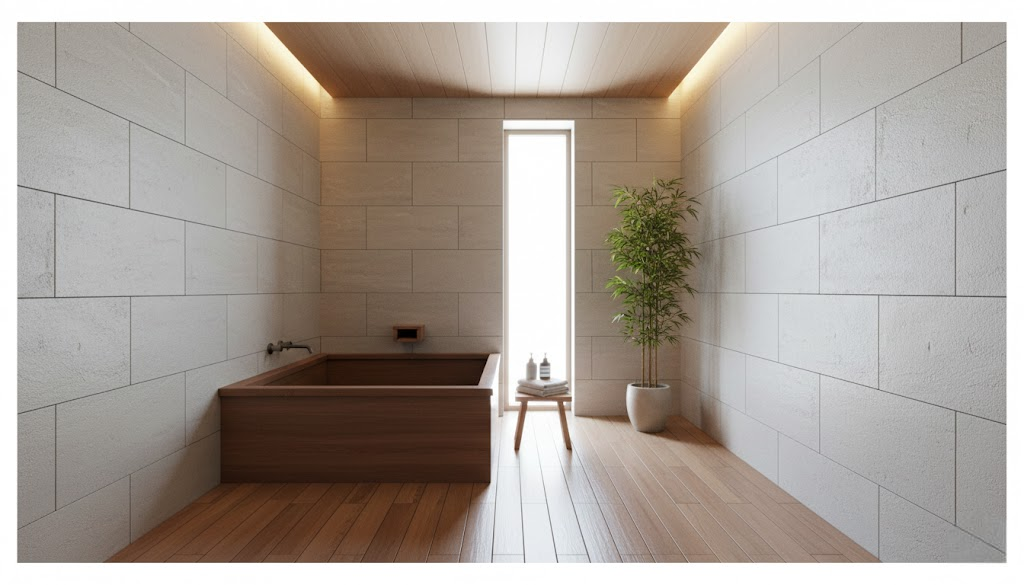
No discussion of japanese style bathroom inspirations is complete without the ofuro. Unlike standard bathtubs, the ofuro is deep and compact, designed for soaking rather than washing.
Why the Ofuro Is Special
- Deep immersion: Allows the body to be fully submerged while sitting upright.
- Heat retention: Often made from wood or insulated materials to keep water warm longer.
- Mental relaxation: Encourages stillness, reflection, and stress relief.
Traditional ofuro tubs were made from hinoki (Japanese cypress), prized for its soothing aroma and antibacterial properties. Modern versions use acrylic, stone resin, or ceramic while maintaining the same proportions.
Installing an ofuro instantly transforms your bathroom into a personal spa.
Natural Materials: Bringing the Outdoors Inside
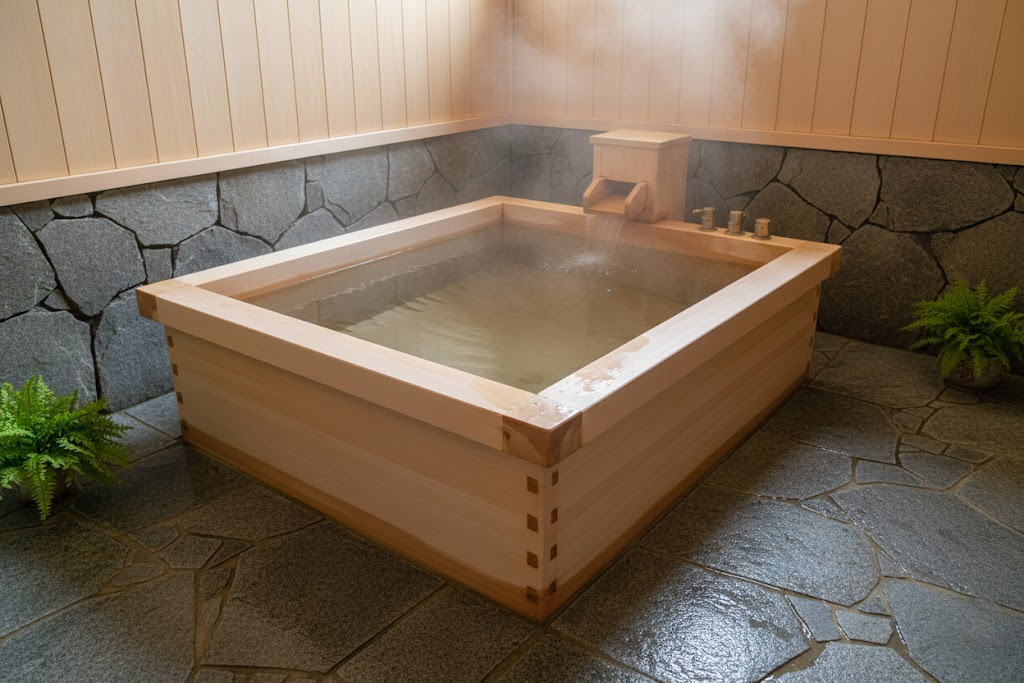
Japanese bathrooms are deeply inspired by nature. Materials are chosen not just for appearance but for how they feel and age over time.
Popular Natural Materials
- Wood: Used for tubs, benches, ceilings, and accents.
- Stone: Ideal for flooring, walls, and basins.
- Bamboo: Common in accessories and storage.
- Clay and ceramic: Used in tiles and sinks for an earthy texture.
These materials create warmth and authenticity. Even in modern apartments, designers use wood-look tiles or stone-inspired surfaces to capture this natural essence.
By choosing natural finishes, your bathroom becomes a calming extension of the natural world.
Minimalism That Feels Warm, Not Cold
Minimalism in Japanese design is often misunderstood. It’s not about emptiness—it’s about intentional simplicity.
In Japanese-style bathrooms:
- Surfaces are clean and uncluttered.
- Storage is hidden or built-in.
- Decorative items are minimal but meaningful.
Instead of filling shelves with products, everything has its place. This reduces visual noise and creates a sense of calm. Soft textures, warm wood tones, and subtle contrasts prevent the space from feeling sterile.
The result is a bathroom that feels peaceful, welcoming, and effortlessly elegant.
Lighting: Soft, Layered, and Serene
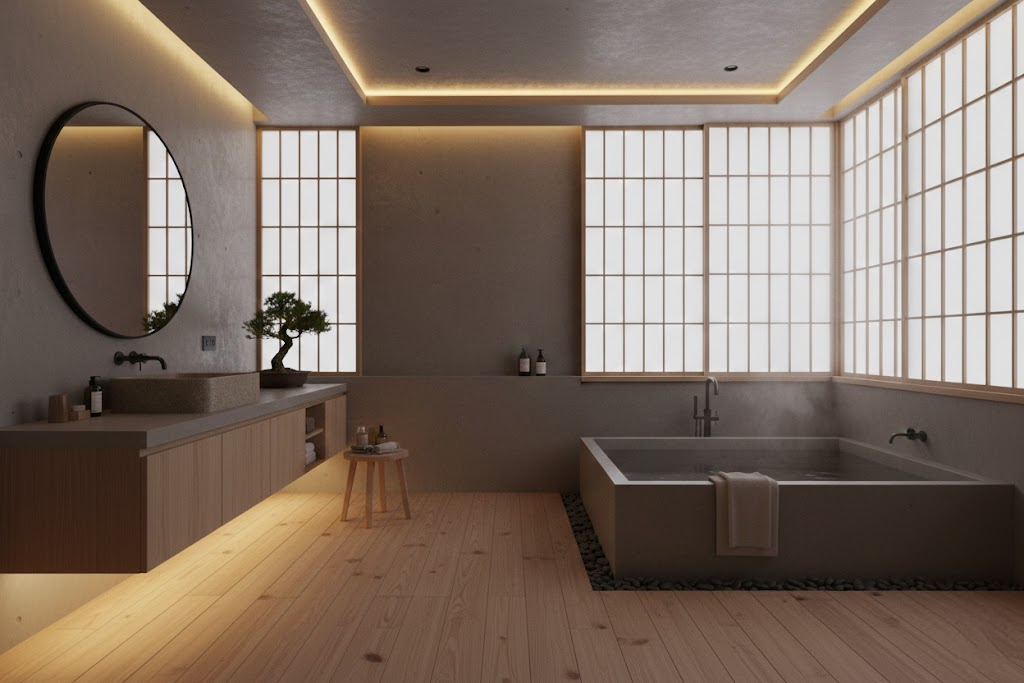
Lighting plays a crucial role in setting the mood. Japanese bathrooms avoid harsh, bright lights in favor of soft, diffused illumination.
Lighting Techniques to Use
- Warm color temperatures: Create a relaxing atmosphere.
- Indirect lighting: LED strips behind mirrors or under benches.
- Paper or shoji-style shades: Soften light naturally.
- Natural daylight: Maximized through frosted windows or skylights.
The goal is to mimic the gentle glow of natural light, enhancing relaxation and visual comfort.
Color Palette: Calm, Earthy, and Balanced
Japanese bathrooms typically use a restrained color palette inspired by nature. These colors promote tranquility and timeless beauty.
Common color choices include:
- Soft whites and creams
- Beige and sand tones
- Warm wood browns
- Stone gray and charcoal
- Muted greens inspired by moss or bamboo
Bold colors are rarely used. Instead, contrast is achieved through texture rather than color, making the space feel harmonious and balanced.
Small Japanese-Style Bathrooms: Making the Most of Limited Space
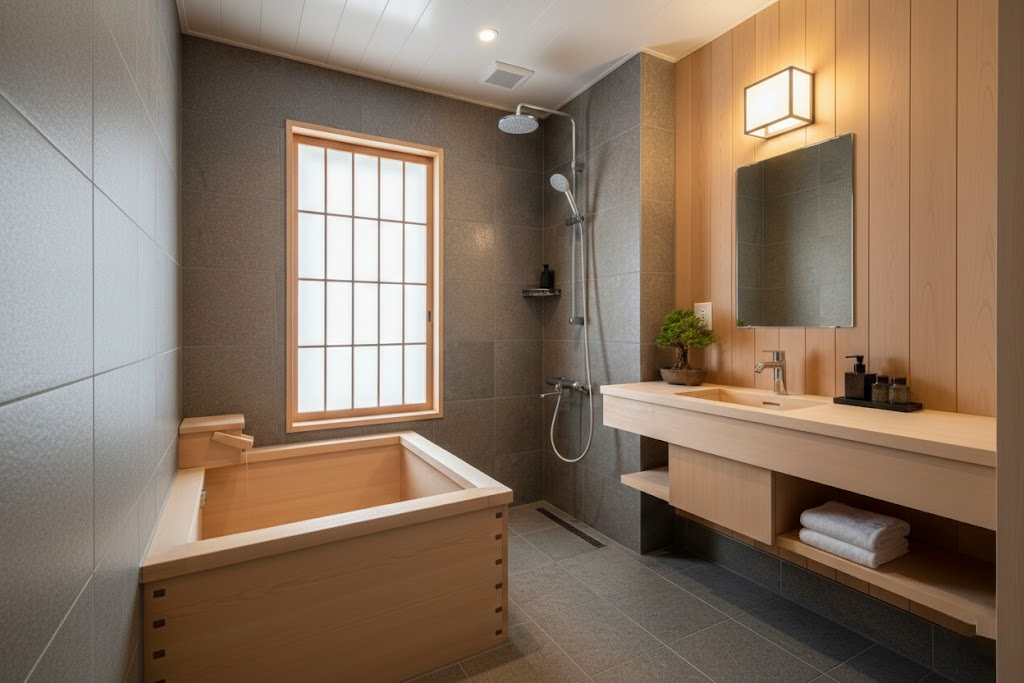
One of the most inspiring aspects of Japanese design is how beautifully it works in small spaces. Even the tiniest bathrooms can feel open and luxurious with the right approach.
Tips for Small Bathrooms
- Use wall-mounted fixtures to free up floor space.
- Choose a compact soaking tub instead of a long bathtub.
- Install sliding doors rather than swinging ones.
- Use mirrors to enhance the sense of space.
- Keep décor minimal and storage concealed.
These strategies prove that size doesn’t limit serenity. Many of the best japanese style bathroom inspirations come from compact urban homes.
Storage Solutions: Hidden, Functional, and Elegant
Clutter disrupts calm, which is why storage is carefully integrated into Japanese bathrooms.
Effective storage ideas include:
- Recessed wall niches
- Floating cabinets
- Under-bench drawers
- Built-in shelves behind mirrors
Storage blends seamlessly into the design, keeping essentials accessible while maintaining a clean, uncluttered look.
Japanese Toilets: Where Technology Meets Comfort
Modern Japanese bathrooms are also famous for their advanced toilet technology. While traditional design focuses on simplicity, innovation plays a key role.
Features often include:
- Heated seats
- Built-in bidets
- Automatic lids
- Deodorizing systems
- Water-saving flush options
These features enhance hygiene and comfort without compromising aesthetics. Many modern Japanese-style bathrooms seamlessly integrate smart toilets into minimalist designs.
Incorporating Plants for a Natural Touch
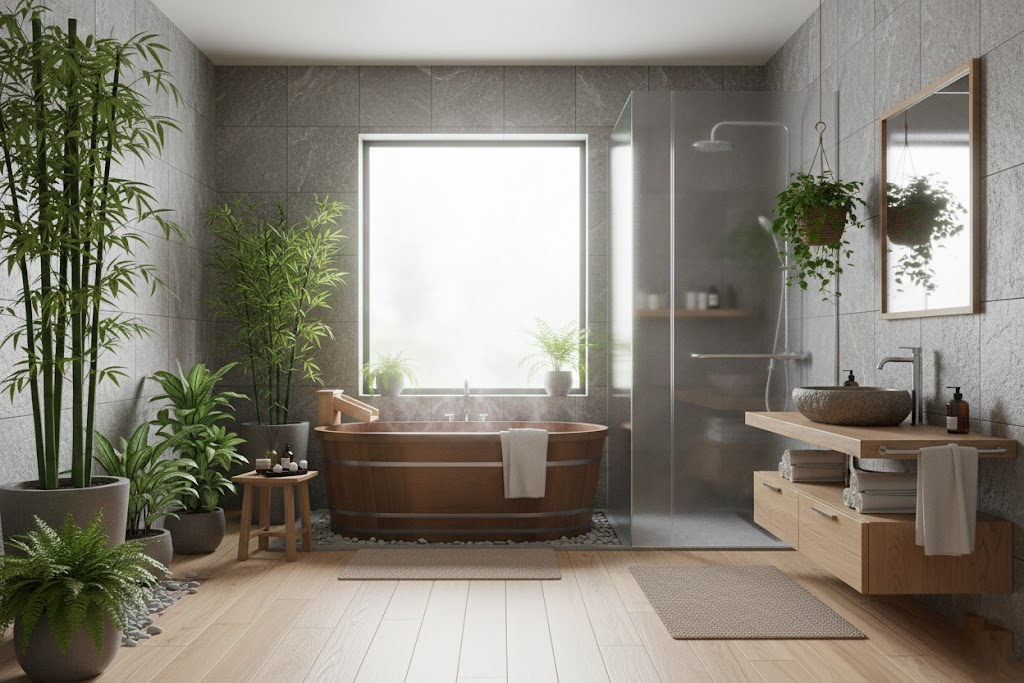
Plants are a subtle but powerful addition to Japanese bathrooms. They reinforce the connection with nature and add life to the space.
Best plant choices include:
- Bamboo
- Ferns
- Snake plants
- Peace lilies
- Moss arrangements
Plants thrive particularly well in bathrooms with natural light and humidity, making them both beautiful and practical.
Modern Japanese Bathroom Design: Tradition Meets Innovation
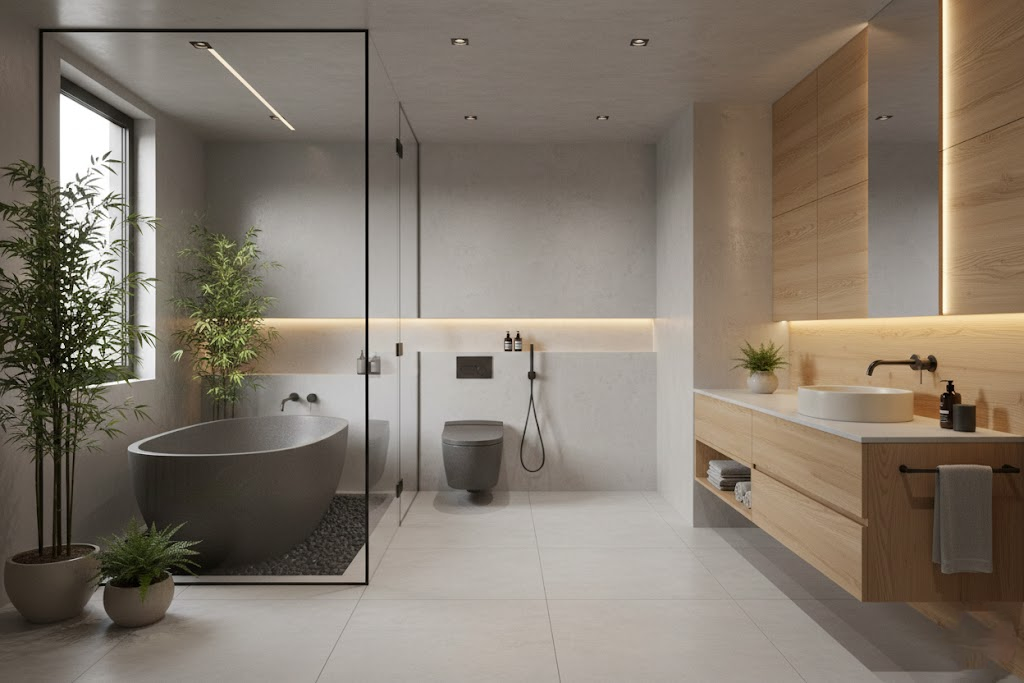
Today’s designers often blend traditional Japanese elements with modern materials and layouts. This fusion creates bathrooms that feel both timeless and contemporary.
Examples of modern adaptations include:
- Concrete walls paired with wooden tubs
- Frameless glass with stone flooring
- Minimalist fixtures with smart technology
- Neutral palettes with bold texture contrasts
This approach allows homeowners to enjoy the essence of Japanese design while meeting modern lifestyle needs.
Creating a Ritual, Not Just a Room
What truly sets Japanese bathrooms apart is the experience they offer. Every detail—from the temperature of the water to the softness of the lighting—is designed to support a mindful ritual.
When you step into a Japanese-style bathroom, you’re encouraged to slow down, breathe deeply, and be present. This mindset is what makes japanese style bathroom inspirations so powerful and enduring.
How to Start Your Japanese Bathroom Transformation
You don’t need a full renovation to incorporate Japanese design principles. Start small and build intentionally.
Simple steps you can take:
- Declutter and simplify your space
- Replace harsh lighting with warm, diffused options
- Add natural textures through accessories
- Introduce a small stool or bench
- Use neutral, calming colors
Over time, these small changes can completely transform how your bathroom feels and functions.
Final Thoughts: Timeless Beauty Through Simplicity
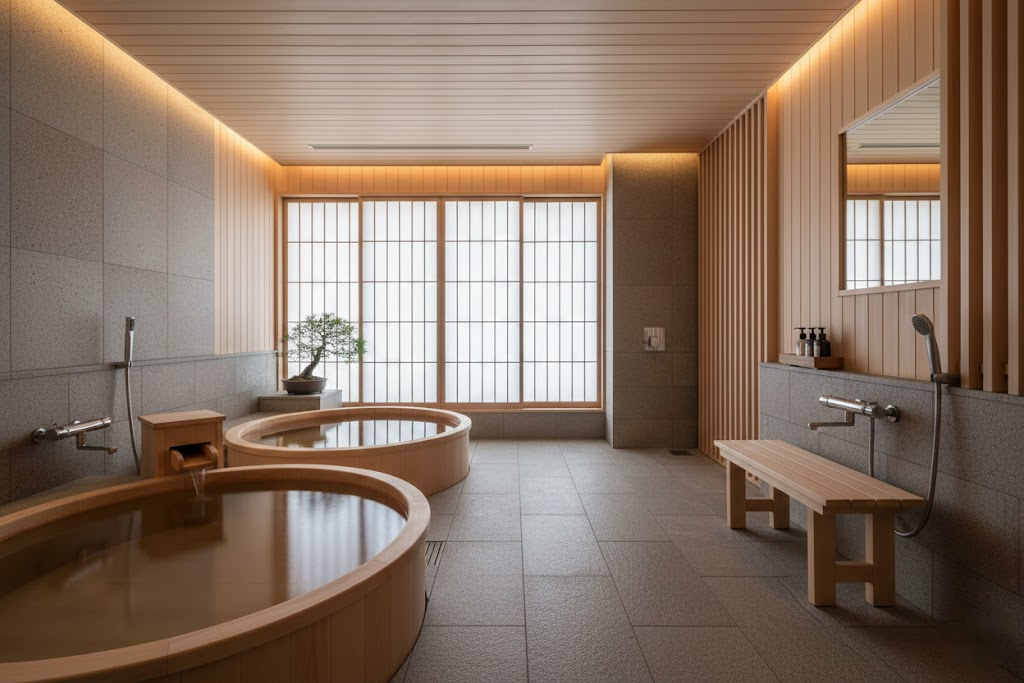
Japanese-style bathrooms are more than a trend—they are a reflection of a lifestyle that values balance, mindfulness, and respect for nature. By embracing simplicity, thoughtful design, and natural materials, you can turn an everyday routine into a deeply restorative experience.
Whether you live in a small apartment or a spacious home, there are endless japanese style bathroom inspirations to explore. With the right approach, your bathroom can become a sanctuary—one that brings calm, clarity, and quiet luxury into your daily life.
If you’re seeking a design that never feels outdated and always feels peaceful, Japanese bathroom design may be exactly what your home needs.

